Featured

Stepping off the ledge

Hopes and Concerns

This year I plan to take on a new challenge in the form of this blog to document my journey into the PYP enhancements. I hope that this blog becomes a personal space to show my own journey through inquiry and how I will embrace student agency within my classroom.

This year what I am hoping to use student agency to build a creative and safe environment of deep student led inquiry and action.

What I am wondering?

  • How will I get parents to play a committed role to their child’s learning journey?
  • How will I embrace agency whilst maintaining academic standards?
  • Most importantly, are my students ready? And if not, how can I support them?

Stay tuned for the ups and downs of the ever challenging inquiry classroom. I am very excited to see what this year brings.

Subscribe below to get notified when I post new updates.

Documentation

What do we document? What do we not? How do we document? What do we include? There seem to be so many questions around documentation in an Early Years setting and when searching for an answer there really doesn’t seem to be just one.

I have recently had a complete ‘shift’ in terms of what I will document and how each piece will be shared. I have always valued the importance of documentation but somewhere along my journey my documentation never really become a living part of the environment. I had been spending so much time creating beautiful documents of learning that would be shared with parents and hung on the wall only for it to be rarely commented on, I was the only one using it for reflection. I now have new understandings and new ambitions for my documentation and hopefully the documentation of my team. It will live and breathe in our classrooms. It will be used for reflection by educators, parents, and learners. It will inform our decision-making and help to create memories of our learning journey throughout the year and beyond.

So where did this shift in thinking come from?

I recently attended a live webinar hosted by Chapters International with guests Anne Van Dam and Fiona Zinn. Both are such inspirational voices in Early Years education and an hour listening to them discuss documentation certainly did not disappoint.

From this 1 hour webinar, which I highly recommend all Early Years Educators watch, we come to understand how documentation deepens over time and is a vital tool in reflection. Documentation is not one-dimensional and there is a relationship that is built from documenting. It helps you to develop metacognition “dig underneath what you are seeing”.

Many people, including myself, get stuck on the how of documentation. What should it look like? Through experience and listening to the voice of ‘experts’ we come to learn that documentation does not only have one way. It is cogenerated and in the PYP should encompass the learner profile, conceptual understanding, attitudes to learning(skills), and knowledge. It is a tool to dig deeper into how we think/children think and our way of being.

This is a place that my thinking has shifted. Although I still believe in the importance of documenting individual growth I have changed the value that I give to that form of documentation. I was privileged enough to attend the first digital study group with Reggio Emilia last month and anyone who has heard of their approach understands the importance of documentation for them. They helped me to understand the importance of maintaining integrity to our belief that knowledge is co-constructed. Therefore I have begun to further see the importance of documenting more of the co-construction of knowledge and having that ‘live’ on our walls for groups of children to reflect on, remember experiences and build on their understandings.

We further understand that documentation is not always beautifully typed reflection but it is also scribbled notes and annotations, but what is its purpose?

“Assessment is a bi-product of documentation”

I love this statement. No longer are we only documenting to assess but we are documenting to plan, to understand learning, to build relationships with learning. From documentation we can co-construct our thinking.

Having just come away from the first Reggio Emilia Digital Study group and reviewing my notes from Fiona and Anne’s discussion my mind feels finally clear. I have a plan about what and why I will document.

Documentation feels natural to me, it is part of who I am as an educator and I certainly could not forego the practice of observing, interpreting and documenting. I personally feel that we cannot teach without it but now I have even more reasons to spend a little more time reflecting on my documentation and ensuring it is feeding directly into my practice and the practice of my team.

Provocation vs Invitation

A common thread in my professional development has been around developing a shared philosophy and mutual understanding amongst team members. Can we truly plan collaboratively without it?

But I am often left with the wondering of what makes a good provocation? What is an invitation? How are they different? And do we all have the same understandings?

When defining those words we find that provocation means the act of provoking, inciting or annoying someone into doing something; whereas invitation refers to request the presence or participation. It seems that an invitation is somewhat passive whereas a provocation is active. To invite means to send a question without expecting an immediate response, to leave something out but not expect someone to take. A provocation insights the receiver to feel something and react. A provocation entices the audience is something that cannot be resisted.

So do both have purpose in the classroom?

I think that it is a difficult question to answer. I find myself often leaving out invitations, especially when introducing a new material into the classroom. I want to see what the learners already know about how to use the item or what they think the item is for. Often it is not set out in a way that is irresistible but will often get observed, examined or moved around. Sometimes even it might take on the purpose of another material or object. It is within these moments that I become the researcher and collect information, data, observations through anecdotal notes or images and then I can plan the provocation.

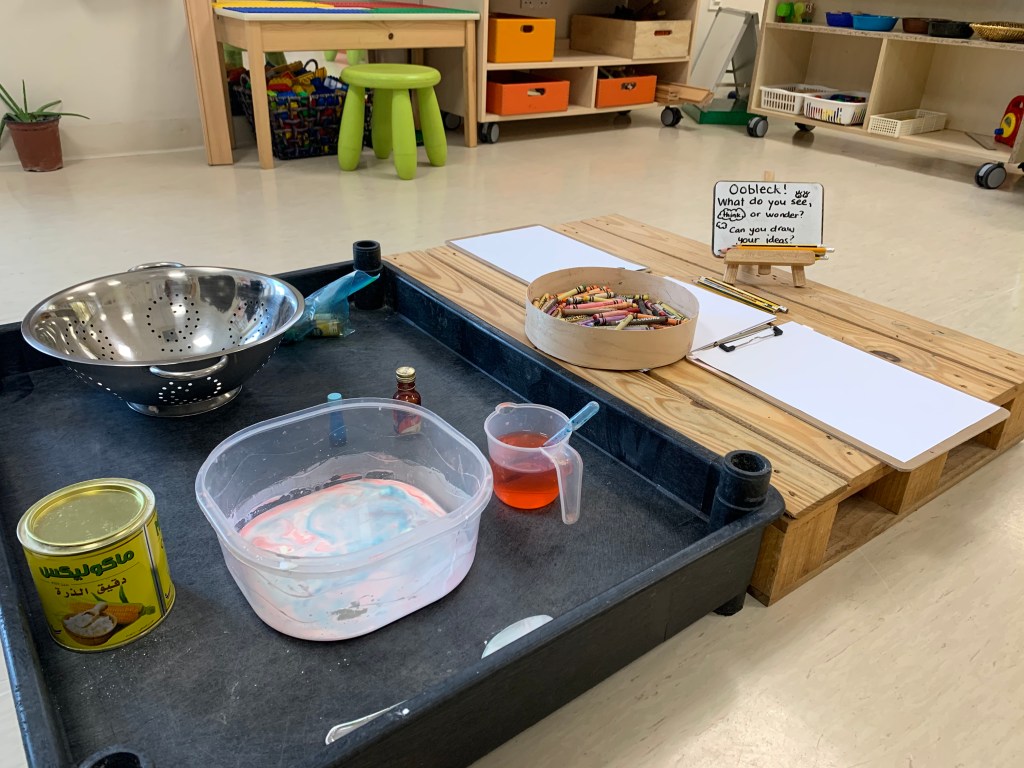
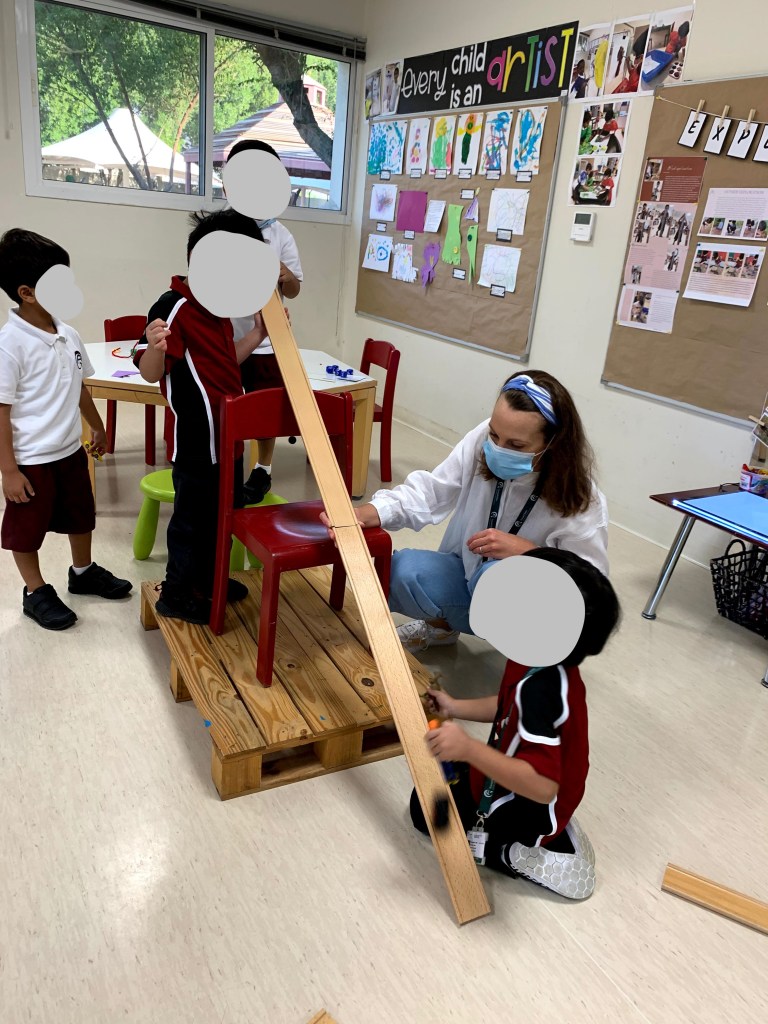
Have a look below at some invitations to learning. What do you see? Do you have an immediate feeling? Do you want to find out more?

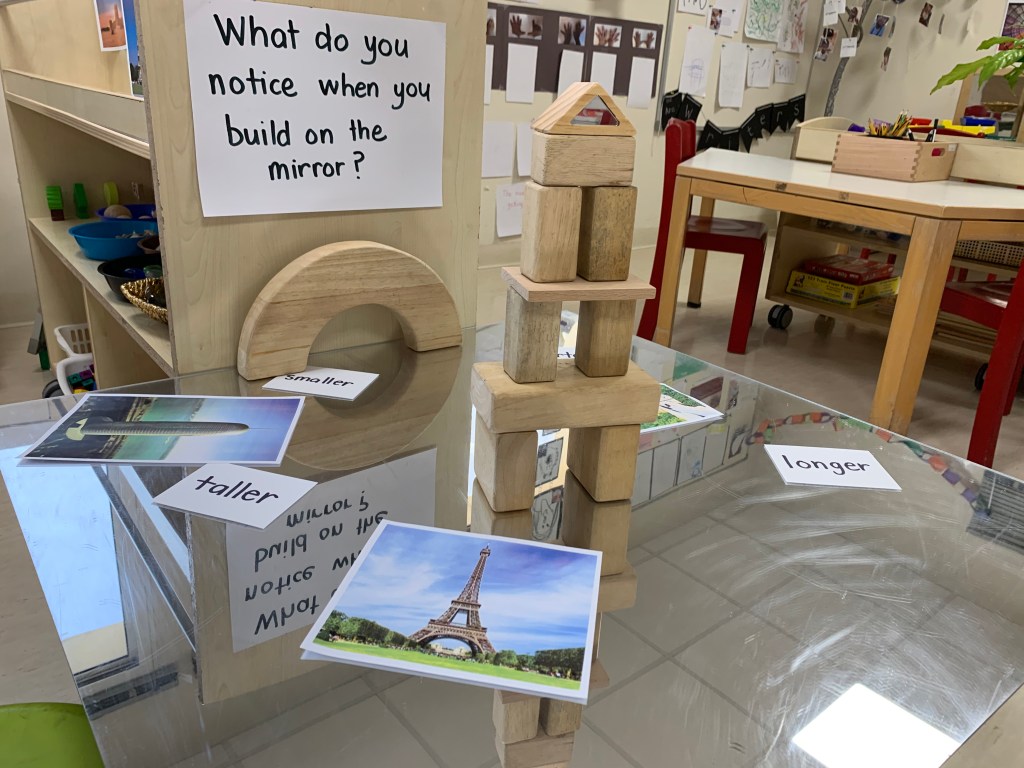
Invitation to build
Invitation to explore oobleck
How can we make it longer?

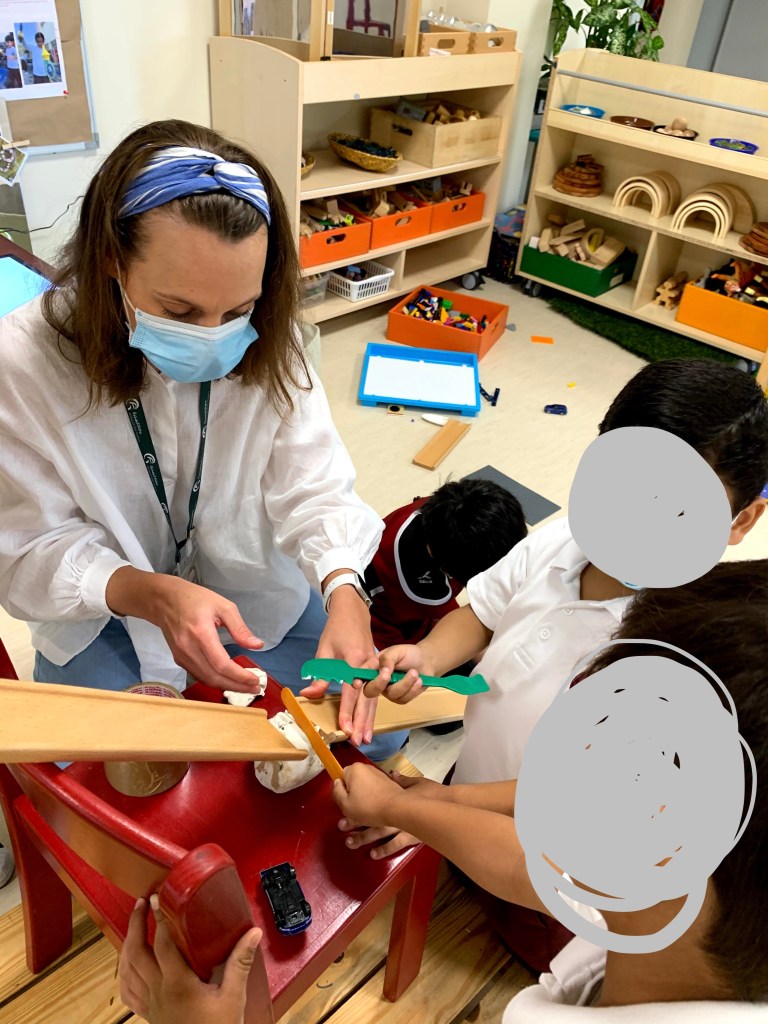
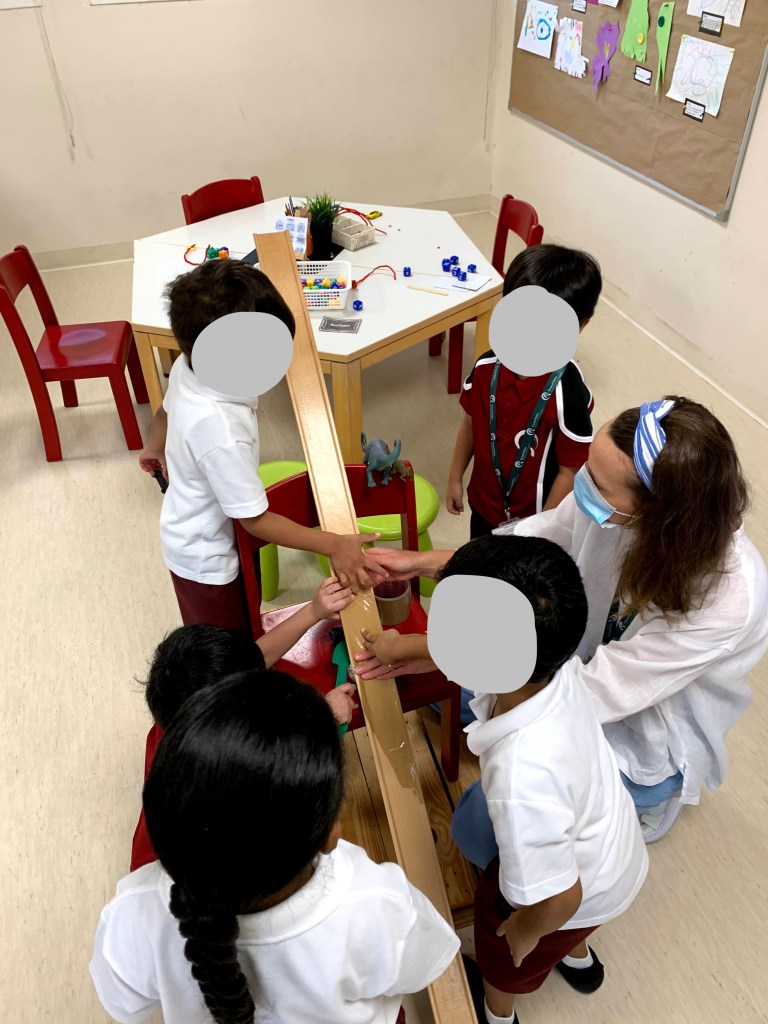
From the images above it is hard to see what might happen, if anything at all but below the images tell a story. The story is of a lonely wooden ramp that perched itself on a chair one day with a car at the bottom. Learners explored and played immediately. They searched for different objects that would roll and compared the speed and distance. Shouts of excitement filled the room when an object was found that had speed and distance. I asked questions about how we could make the ramp steeper? longer? How could we change it to make cars travel faster? further? This was the provocation, my questions. I provoked them further by giving them different types of tape, clay, blocks. What could they do with them? How could they add them?

How can we add clay? What might we use clay for?
Can we use tape? Will it be strong enough?

In this learning experience everyone became involved. Learners left small spaces in the room to contribute or to find our more about what was happening. You could feel the excitement the emotional connection to the learning. Is that emotional connection the true meaning and purpose of a provocation?

What does it look like in your classroom? Do you set up invitations or provocations? Do you invite before you provoke? Does it matter if you don’t?

Finger rhymes or a visit to the moon?

Can we stay true to our philosophy in a virtual environment?


How can we teach responsively and ensure play is at the forefront when connecting with children online?


These two questions have been constantly on my mind since the year began. How would I meet and engage with 4-year-olds virtually? How would I ensure their parents that when they send their children to school they would do so with confidence that their child would receive a play-based program?
Well, like many things in the inquiry world my questions were all answered naturally, unplanned and in the moment.
As I entered my first virtual class with a single student I went in with a plan to teach a finger rhyme that we could use in class. One that could be adapted to hand-washing or used to familiarise the student but at that moment of seeing his face I forgot all my plans and I did what felt natural to me. I listened. I listened as he spoke about rocket ships and space. He told me about what he knew about the moon and how astronauts wear special clothes and then at that moment he finished I asked if he would like to go to the moon right this very minute? And so we did.
Although we were not in the same room or even the same building we were connected by a screen and through that screen we played! We flew to the moon in our rocket ships and we moonwalked. He helped me get better at moonwalking. More Bounce! Bigger Steps! And then we flew back to earth.
The next day I met the same student online and I had built a lego rocket ship that I was excited to show him. When he entered the meeting room he was holding his rocket that he had made. We had made a connection!
By connecting through play gave space for authentic inquiry, allowed us to find something to connect on, and led to action.

Transition

For many of us around the world this academic year has been different. I am embracing those changes alongside new challenges as I embark on a journey alongside our youngest learners. I am moving into the Early Years!

There are parts of me that are bursting with excitement for a completely new challenge. To learn and to try to somewhat execute a philosophy based around play and student agency with those who find inquiry so natural inspires me to do better and be better. There is also fear. Fear that I will not know enough, that I will make mistakes and with that comes the understanding that this year will be full of challenges and opportunities for growth.

I look forward to documenting my journey. I know it hasn’t started the way that I had planned. I envisioned welcoming smiling faces into a classroom of wonder when in reality I have met 4 year olds online who think I am a stranger. They are curious about who I am and are excited for school but the relationship building process will be different and will be more challenging than what I expected.

I have been doing some research about building relationships online and came across a post which took me to an amazing website outlining the work of Fred Rogers. He talks about using ordinary experiences to connect with students, to create wonder and curiosity. This video clip is of my first post, as always there are things I might change or improve on but what I hopes comes across is honesty and respect for the child.

This is my welcome message online using ordinary objects.

Learners responded to my video with questions and ideas about where the feather might have come from. They had ideas about what to do with it and so I have now begun a little routine. Good morning, look what i found….

Action

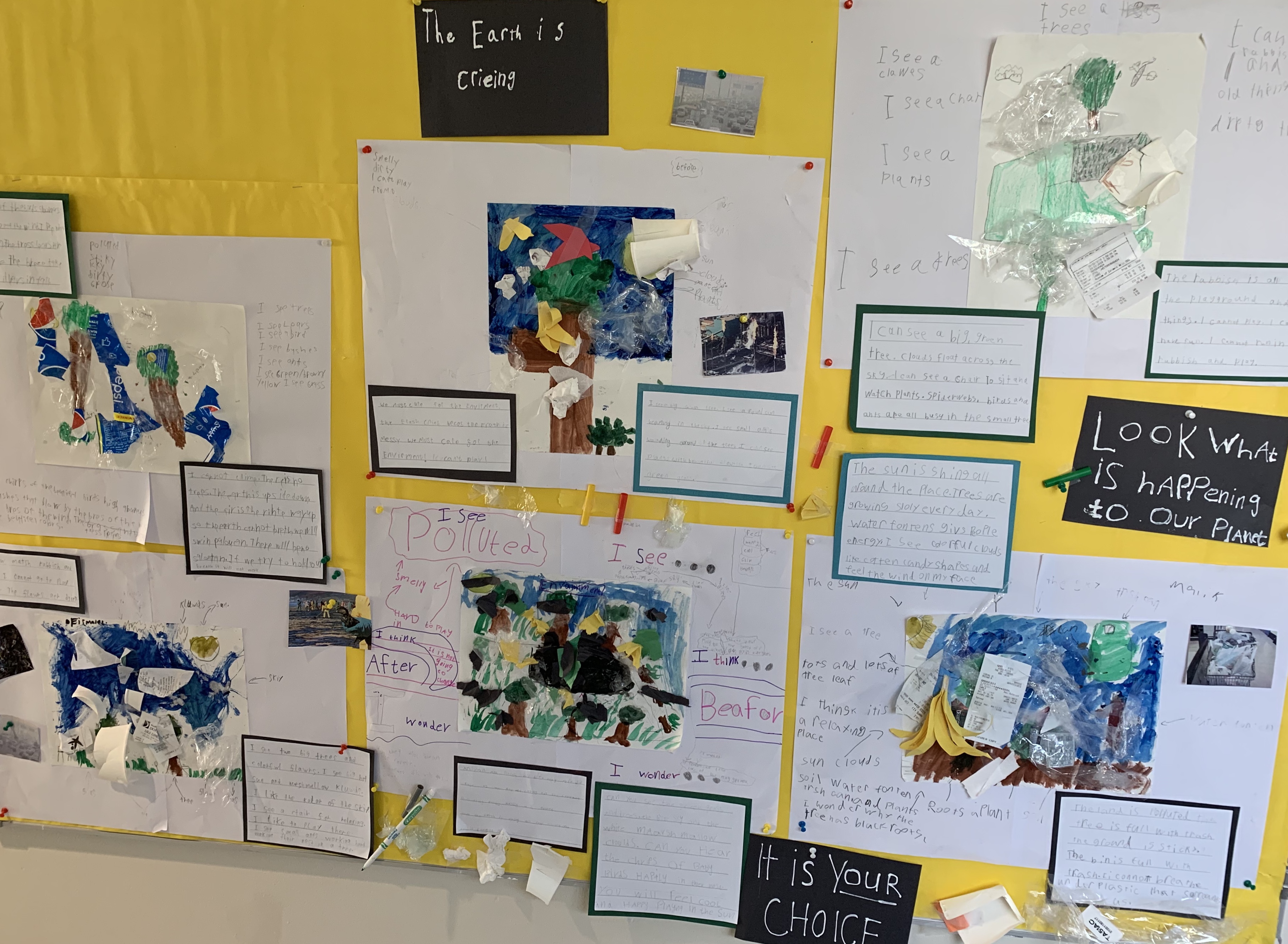
Since the beginning of the year action has been at the forefront of my mind. Whilst trying to create a classroom that engages learners, balances the three aspects of agency and provides opportunities for deep conceptual understanding I have also been actively taking steps to create room for action. And there has been small scale action, and wonderful ideas of action that lacked follow through by students, but nothing that everyone got behind, that really impacted the community. So I have decided to give it more focus in our classroom. Our new unit is a focus on choices and action by humans to find ways to manage waste and sustain resources. As a part of our initial provocation I asked students to visually represent the concept – environment, whilst taking part in the observation stage learners noticed a lot of rubbish left in the playground after lunch. This made room for descriptive writing opportunities – what did our playground look like before / after humans interacted with it. The learners have decided to take action with a display board within the school. We have big ideas – and this time there will be the follow through.

Planning an engaging unit – laptops down.

Two weeks ago was the beginning of a new unit for us. I was intent on it being engaging, after the past 5 weeks when I seemed to be dragging my class through a unit in which they showed very little interest.

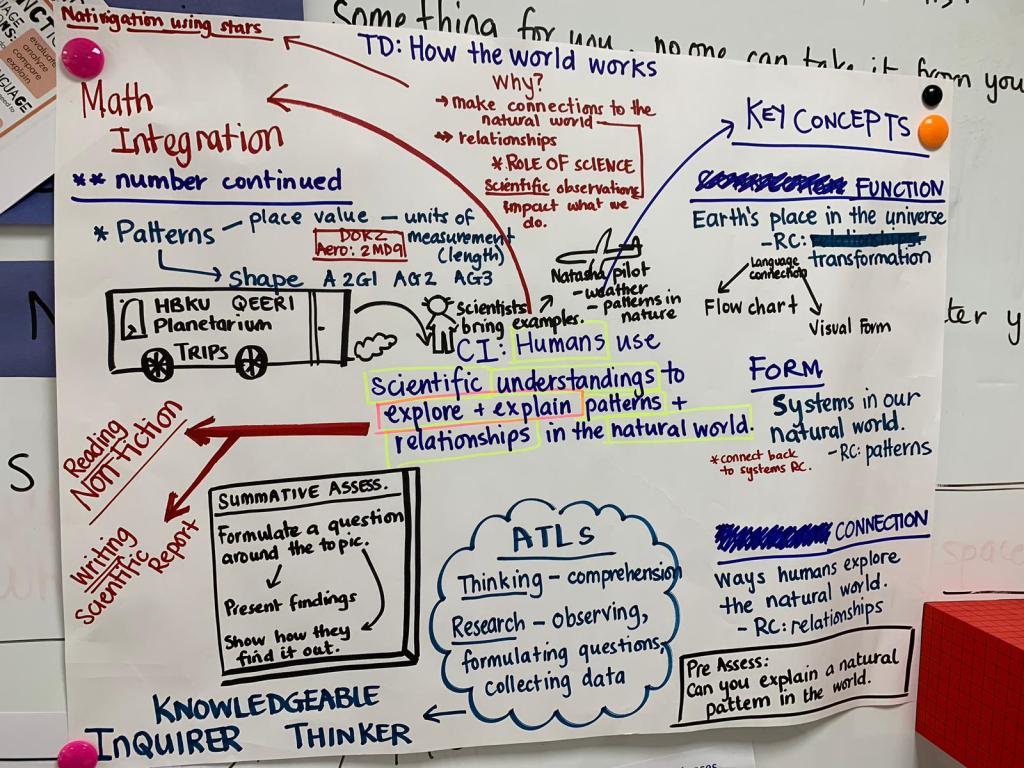
After previous planning meetings where we all sit around with our computers open it seemed that it was easy for us to lose focus, to jump around between tasks without really completing anything well. So we decided to put our laptops to the side, get out the markers and chart paper and collaboratively plan. And this is what we came up with:

We were able to share this with specialists and it has formed the skeleton of our unit that we have been able to plan rubrics around and begin a new focus on student assessment.

Not all co-teaching experiences are created equal

I am lucky enough to have had experience of what it can look like when co-teaching works….It doesn’t always work…but when it does…truly amazing things can happen.

In my previous school, we had the co-teaching model. Although some years, weeks or months were challenging, it was mostly a positive experience. I have been missing having someone to bounce ideas off, to be next to me when lessons are failing and above all to celebrate and share in successes. Teaching can be a lonely business and having a partnership where there is a continuous stream of feedback encourages us to take risks, experiment and reinforce our shared values around learning.

I recently had the pleasure to spontaneously co-teach an open inquiry math lesson with another teacher from my school. We had very little time to plan together (no more than 10 minutes, just 15 minutes before the lesson). We had one idea, but that was it. We were going out on a limb together and were open to see how it would go. Two hours flew by, and the room was abuzz with children absorbed, inquiring, learning and pushing themselves beyond what they knew. It went was probably one of the best co-teaching lessons I have been apart of.

We began by introducing the conceptual lenses for the lesson. The students began to list what they were learning and sort their knowledge under the concepts of form and function. After identifying that they still had questions around place value, skip counting to 1000 and the patterns within numbers we had our lesson focus, all decided by them. AGENCY!

As teachers we were able to take turns gathering understandings, assessing what misconceptions learners had, all whilst moving the learning on. My co-teacher and I were modelling the ATLS of group work and communication as we unpacked.

Students were provided with a variety of math manipulatives that they had been previously been using, number lines, hundreds chart (blank and numbered), counters, ten frames and base 10 blocks and then they were underway.

Having two teachers circulate the room with intention meant that the students understanding of place value grew quickly. All students were challenged and engaged in very different tasks. Self-directed learning was highly evident in that moment. As a solo teacher this has presented challenges to ensure all learners are continuously engaged and stretching themselves. Having two teachers observing, monitoring learning meant that all children were challenged and supported appropriately. As a result of this continuous feedback to feedforward students began to ask deep and meaningful questions that in later lessons took our understanding much further.

Amongst all of the learning chaos action was generated when a student realised that there was an easier way to teach others how to read larger numbers. She created a frame that was able to guide number reading. Many students were in turn able to learn from her model.

Not all of my co-teaching experiences have been as positive. I think what made this one so good was that we both had an open mind and we were ready to take a risk and fail if need be. We both truly believed in the idea of agency and inquiry and as a result, we saw the benefits in both learning and the smiles on the students’ faces as they announced that they just loved math!

Voice, Choice, Ownership and SOLO Taxonomy

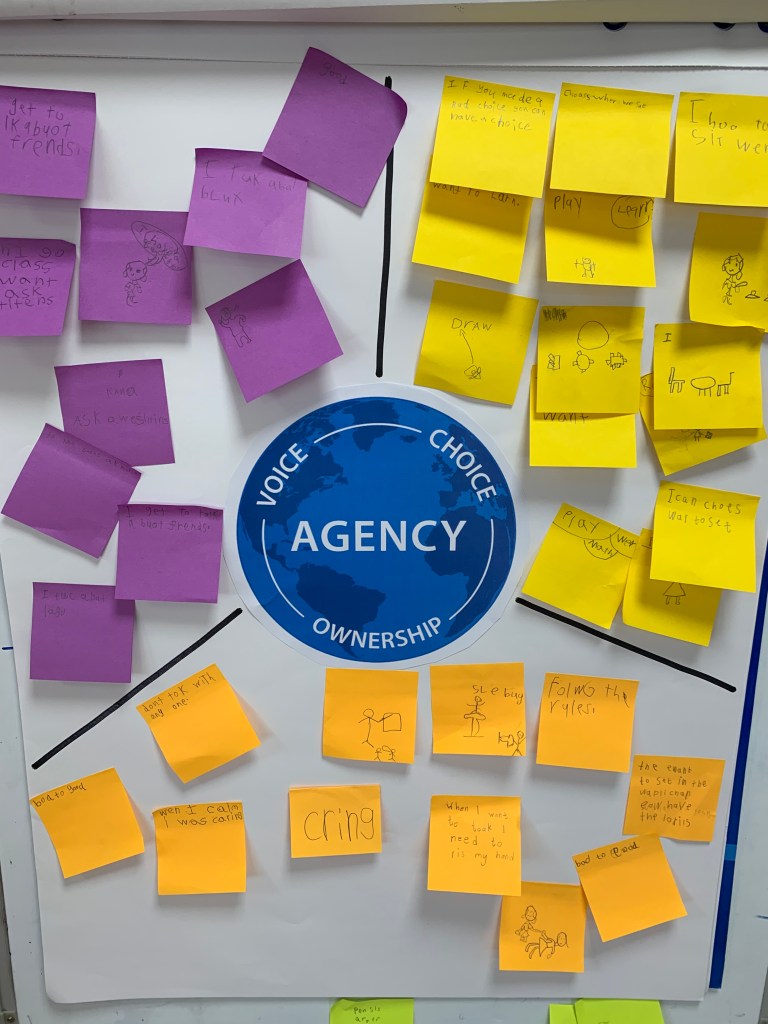
The beginning didn’t really go to plan and after the first day with students I was left wondering if this year really would see deep inquiry and agency in action simultaneously in my classroom. But despite my initial concerns we have kept at it…and the results have been amazing! Already we have had several student initiated actions and inquiries, and the atmosphere in the classroom has been electric. Students are collaborating and beginning to use the language of inquiry as they work. We have deeply reflected on what it means to take ownership of our learning and the balance that must be kept when using our voice and choice.

Student reflections of voice, choice and ownership in our classroom.

SOLO Taxonomy – how it has changed reflection and assessment.

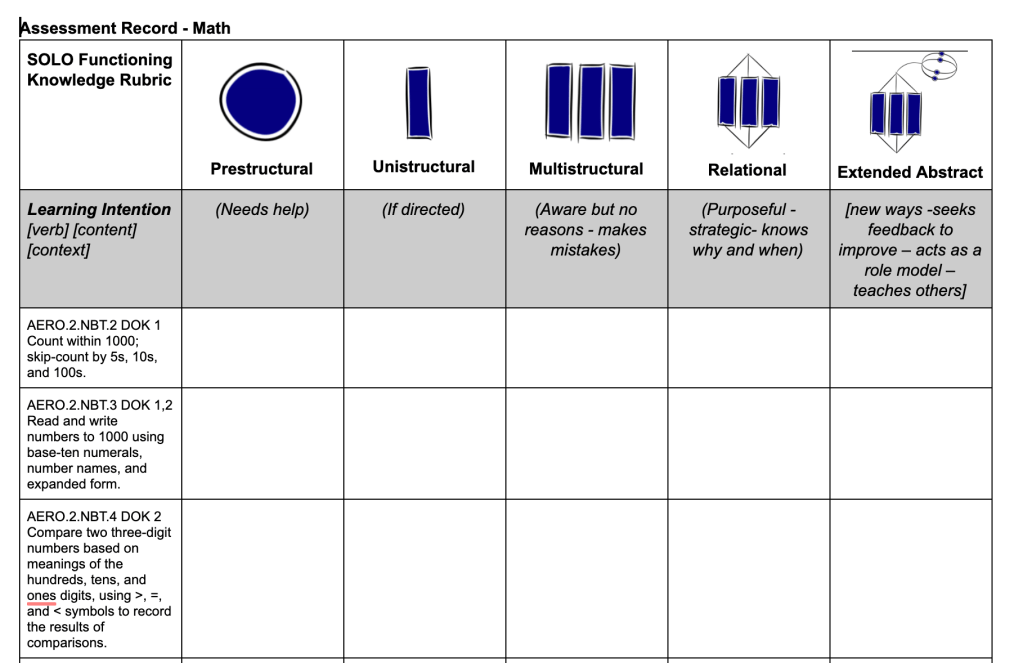
One aspect that has really helped the past two weeks is the power of reflection and self differentiated learning. After quite a lot of reading into the use of SOLO taxonomy the students and I have worked to implement this in every aspect of our learning. It has even extended beyond our classroom into our grade level assessments for our transdisciplinary units and will also be used to help inform our student support services for students that require extra help.

Sample of assessment record for math using SOLO Taxonomy

Introducing SOLO Taxonomy to students and its use as a self assessment tool

Rather than explicitly front loading students with the SOLO taxonomy I showed them only the icons for each phase (see above) and asked what they thought they meant in terms of growth as a learner. One student suggested that the pre-structural phase was like a seed waiting to grow. The positive nature of this student’s comment on the beginning phase of learning has really stuck with me. I began to reflect on the use of smiley faces on previous self-reflection sheets that I had used. The beginning of learning is a powerful stage that should also be celebrated. We immediately then started to use the images and definitions that the children gave to them to assess ourselves as inquirers, how much we thought we knew about the conceptual understandings in math and language.

Going further with SOLO Taxonomy.

After an email from the PYP Coordinator with a link to an ATL document asking how we might use it within our school I suggested I pose it to my students. Perhaps we could use SOLO taxonomy? I asked the students what they already knew and wondered about our focus ATL skills (social and self-management) for our current unit of inquiry. After recording they were able to match their understanding with numerous pictures that they had sorted through that I had gathered. I asked how we could know where we were and how we could improve. And as I hoped they suggested SOLO Taxonomy. We created human graphs to show where we think we were and plan to dive deeper into what those phases actually look like this coming week. I look forward to sharing this back with our PYP Coordinator. This could be the beginning of student agency informing teaching and learning at our school, and what assessment looks like.

This is just one example of how student agency has been promoted so far, and it’s only WEEK 1! Students also have choice with the use of flexible seating, how they record work, what manipulatives they work with and most importantly with what inquiries they dive deeper into.

I can honestly say that I am looking forward to what this week will hold for PYP2. The impact that agency has had on the students enthusiasm for learning is truly inspiring!