A common thread in my professional development has been around developing a shared philosophy and mutual understanding amongst team members. Can we truly plan collaboratively without it?
But I am often left with the wondering of what makes a good provocation? What is an invitation? How are they different? And do we all have the same understandings?
When defining those words we find that provocation means the act of provoking, inciting or annoying someone into doing something; whereas invitation refers to request the presence or participation. It seems that an invitation is somewhat passive whereas a provocation is active. To invite means to send a question without expecting an immediate response, to leave something out but not expect someone to take. A provocation insights the receiver to feel something and react. A provocation entices the audience is something that cannot be resisted.
So do both have purpose in the classroom?
I think that it is a difficult question to answer. I find myself often leaving out invitations, especially when introducing a new material into the classroom. I want to see what the learners already know about how to use the item or what they think the item is for. Often it is not set out in a way that is irresistible but will often get observed, examined or moved around. Sometimes even it might take on the purpose of another material or object. It is within these moments that I become the researcher and collect information, data, observations through anecdotal notes or images and then I can plan the provocation.
Have a look below at some invitations to learning. What do you see? Do you have an immediate feeling? Do you want to find out more?
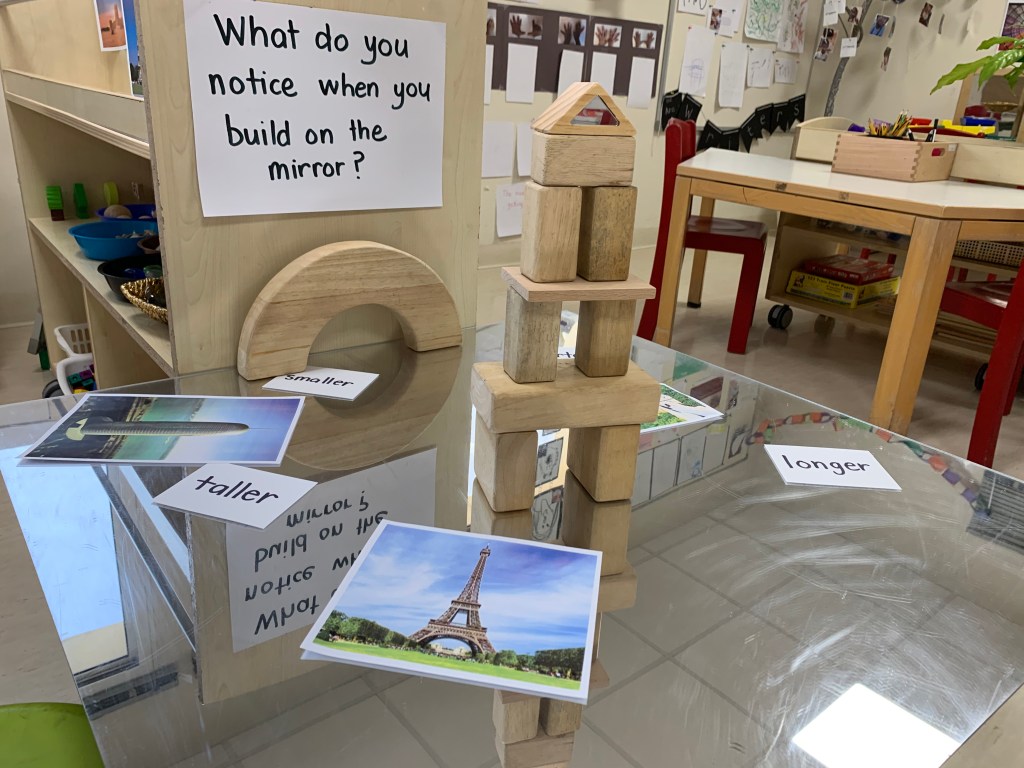
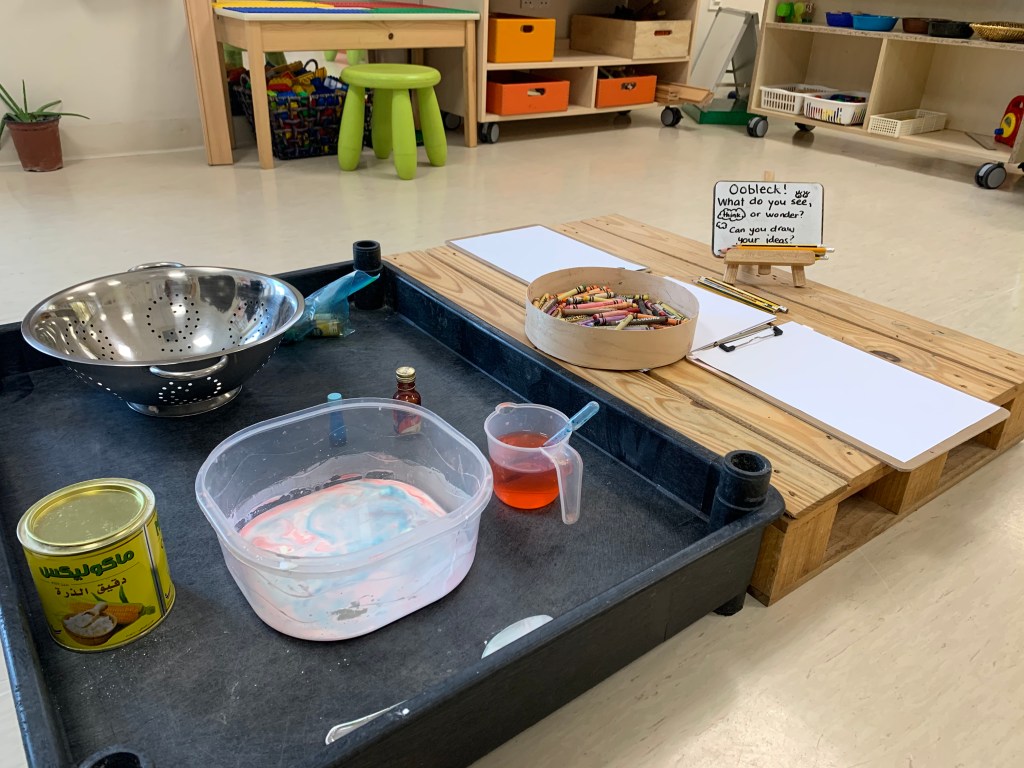
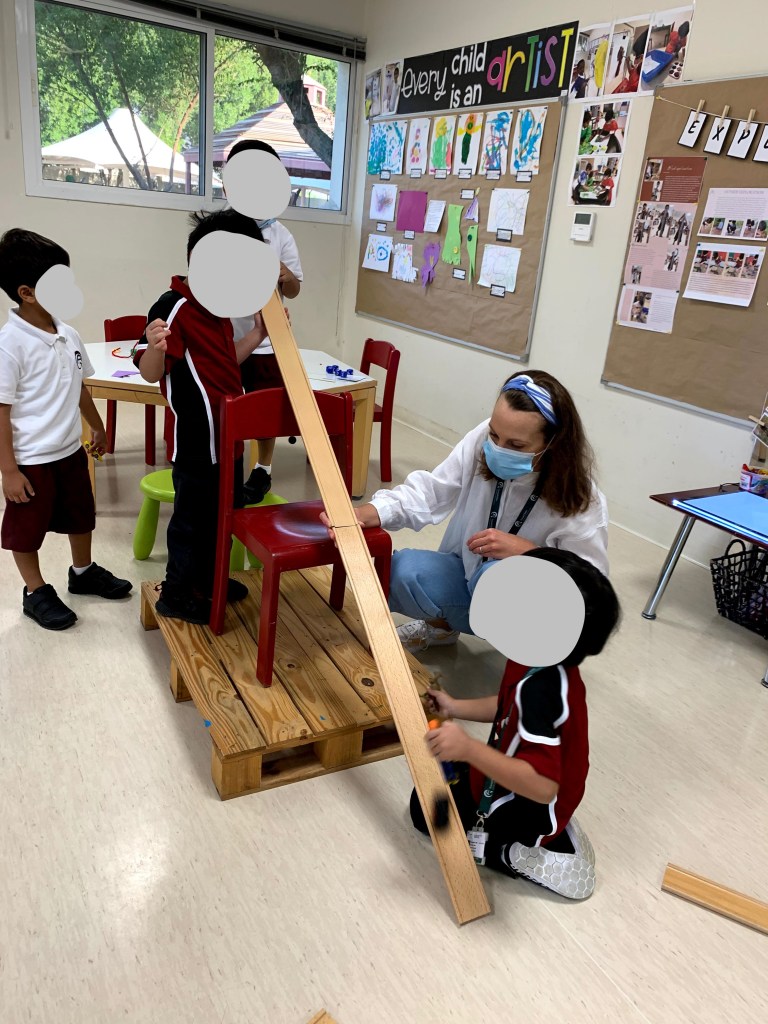
From the images above it is hard to see what might happen, if anything at all but below the images tell a story. The story is of a lonely wooden ramp that perched itself on a chair one day with a car at the bottom. Learners explored and played immediately. They searched for different objects that would roll and compared the speed and distance. Shouts of excitement filled the room when an object was found that had speed and distance. I asked questions about how we could make the ramp steeper? longer? How could we change it to make cars travel faster? further? This was the provocation, my questions. I provoked them further by giving them different types of tape, clay, blocks. What could they do with them? How could they add them?
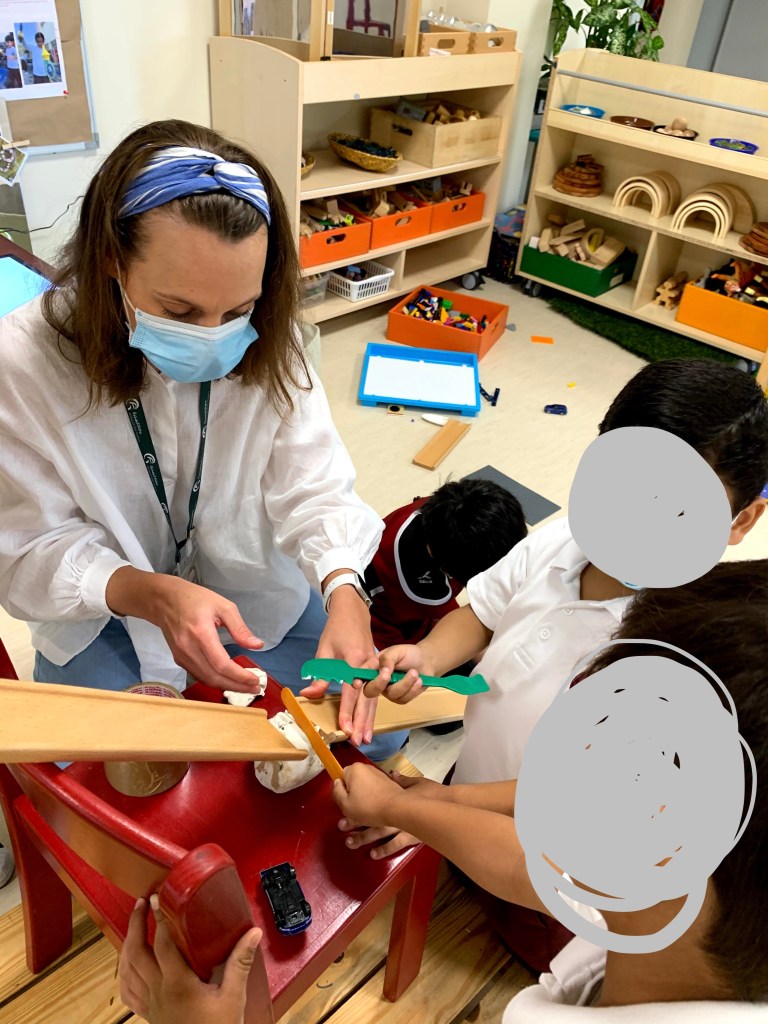
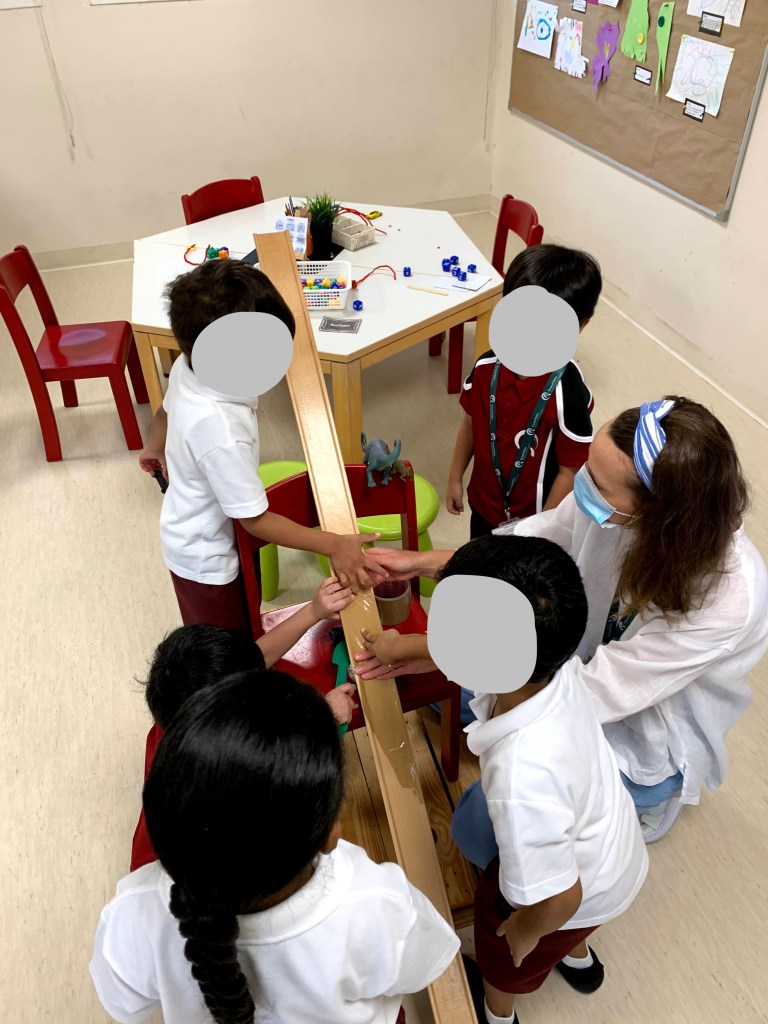
In this learning experience everyone became involved. Learners left small spaces in the room to contribute or to find our more about what was happening. You could feel the excitement the emotional connection to the learning. Is that emotional connection the true meaning and purpose of a provocation?
What does it look like in your classroom? Do you set up invitations or provocations? Do you invite before you provoke? Does it matter if you don’t?
 EnhancedInquiryFootprints